
Porcelain veneers and composite bonding are common cosmetic options for repairing a chipped front tooth. Each approach has distinct advantages and trade-offs, so it is important for patients to understand the differences before choosing treatment. This article compares effectiveness, cost, longevity, and aesthetic results to help you determine which option best meets your needs.
In Kearny, a chipped front tooth can affect both appearance and confidence. Porcelain veneers and composite bonding provide effective solutions but differ in procedure, durability, and final outcome. This article reviews the procedures, identifies suitable candidates for each treatment, and explains how to schedule a consultation at Trovato Family Dentistry.
Research on aesthetic management shows that traumatic injuries to anterior teeth are managed using various restorative procedures.
Restorative Options for Traumatized Anterior Teeth
This review describes the treatment of traumatic injuries to anterior teeth and the restorative procedures used to repair the injured tooth or teeth. Several alternatives exist for treating a fractured tooth.
Aesthetic management of traumatized anterior teeth, 1995
Comparison of Porcelain Veneers and Composite Bonding for Repairing a Chipped Front Tooth
Understanding how porcelain veneers and composite bonding differ is crucial when repairing a chipped front tooth. Both aim to restore the tooth’s appearance, but they employ different materials and techniques that affect outcomes.
Effectiveness
Porcelain veneers provide reliable aesthetic enhancement and are custom-made to match the color and shape of surrounding teeth for seamless integration. Composite bonding is well suited to quick, single-visit repairs and can look natural, though its long-term durability is generally lower than that of porcelain veneers.
Cost
Cost is an important consideration. Porcelain veneers typically range from $800 to $2,500 per tooth, depending on case complexity and materials. Composite bonding is generally more economical, commonly costing between $300 and $1,500 per tooth.
| Treatment Type | Cost Range | Longevity |
|---|---|---|
| Porcelain Veneers | $800 – $2,500 | 10-15 years |
| Composite Bonding | $300 – $1,500 | 5-7 years |
Longevity
Longevity affects long-term value. Porcelain veneers can last 10 to 15 years with proper care, offering a durable cosmetic solution. Composite bonding typically lasts about 5 to 7 years before repair or replacement may be required, which can influence overall cost over time.
Further research indicates that ceramic laminate veneers maintain viability over time, even on teeth that previously received composite restorations.
Ceramic Laminate Veneer Survival on Intact vs. Composite-Restored Teeth
The clinical survival of ceramic laminate veneers up to 40 months was not significantly influenced when they were bonded onto intact teeth or onto teeth with ECR.
Clinical longevity of ceramic laminate veneers bonded to teeth with and without existing composite restorations up to 40 months, MMM Gresnigt, 2013
Aesthetic Outcomes
Aesthetic outcome is a primary concern for many patients. Porcelain veneers closely mimic the translucency and texture of natural teeth, resist staining, and retain colour over time. Composite bonding can also achieve a natural appearance but is more susceptible to staining and wear, which may alter the aesthetic result over time.
What Are Porcelain Veneers and How Do They Repair Chipped Front Teeth?
Porcelain veneers are thin, custom-made shells of dental porcelain that cover the front surface of a tooth to improve colour, shape, size, or length. The procedure requires minimal tooth preparation, with a small amount of enamel removed to ensure a precise fit. Once bonded, veneers conceal chips, cracks, and other imperfections to restore a natural-looking smile.
What Is the Porcelain Veneers Procedure at Trovato Family Dentistry?
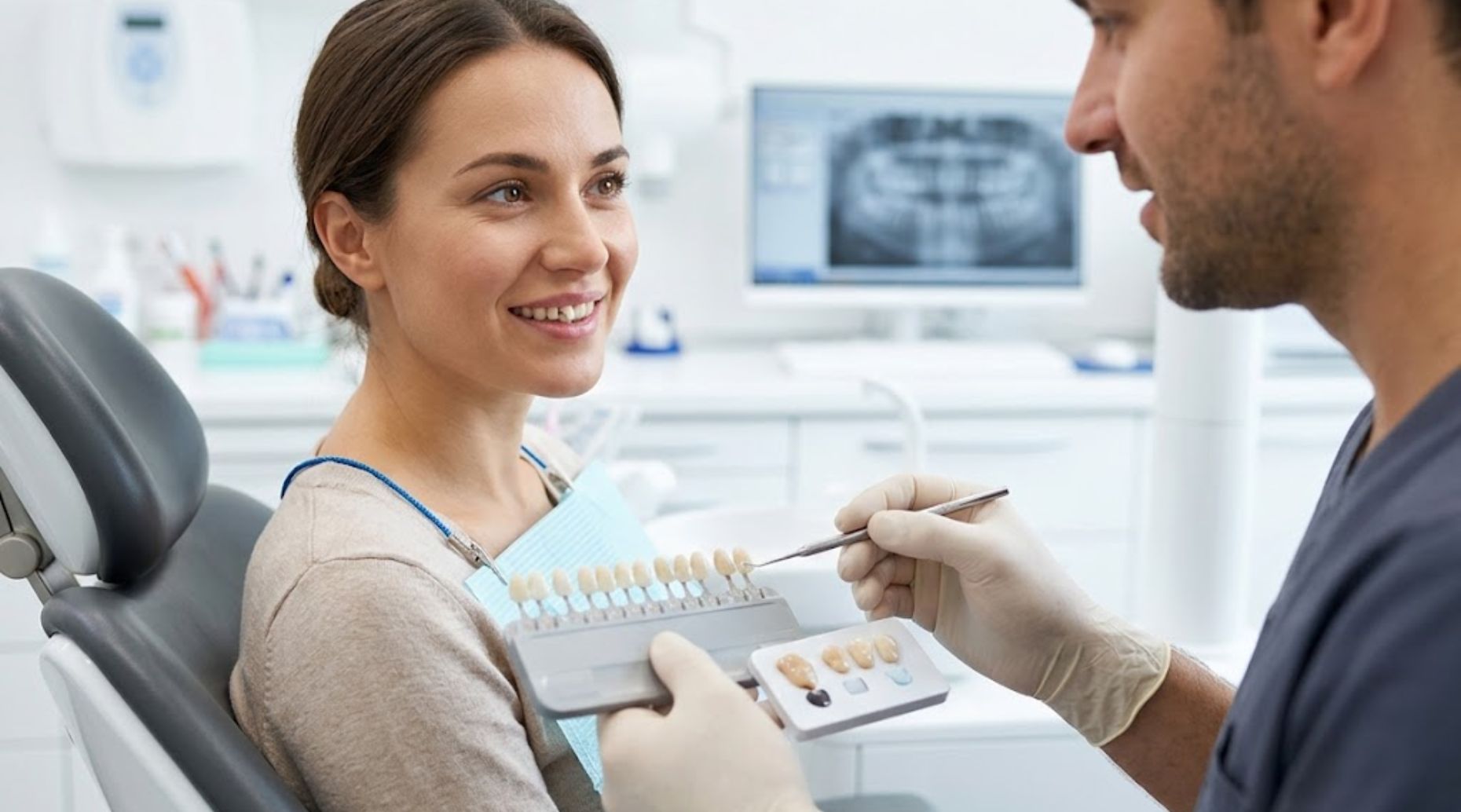
At Trovato Family Dentistry the veneer process typically begins with a consultation to assess needs and confirm suitability. The tooth is then prepared by removing a small amount of enamel, and impressions are taken to fabricate custom veneers. In a follow-up appointment the veneers are bonded to the teeth, producing a precise fit and a natural appearance.
How Does Advanced Technology Enhance Porcelain Veneers Outcomes?
Advanced technology improves veneer outcomes through digital imaging and CAD/CAM systems that enable precise measurements and design. Improvements in porcelain materials also yield stronger, more lifelike restorations that better replicate natural tooth translucency. These advances contribute to improved fit, aesthetics, and patient satisfaction.
How Does Composite Bonding Compare as a Repair Option for Chipped Teeth?
Composite bonding repairs a chipped tooth by applying a tooth-coloured resin to the damaged area, which is then shaped and polished to match adjacent teeth.
Advantages of Composite Bonding
Composite bonding is cost-effective and can usually be completed in a single visit, making it a convenient choice for patients seeking prompt results. The material can be adjusted and repaired relatively easily, offering flexibility for future modifications.
Disadvantages of Composite Bonding
Composite bonding is generally less durable than porcelain veneers and is more prone to chipping and staining over time. This may necessitate more frequent repairs or replacements, which can increase long-term costs. The aesthetic outcome can be very good but may not fully match the natural appearance and longevity of porcelain veneers.
Studies on direct resin composite restorations detail factors that influence their lifespan and common failure reasons.
Direct Resin Composite Longevity & Failure Factors
The primary reasons for composite failure were secondary caries, restoration fracture, and marginal defects. Observation periods varied from 1 to 17 years, and failure rates ranged between 0% and 45%. A linear correlation between failure rate and observation period was found (P<0.0001).
Longevity of direct resin composite restorations in posterior teeth: a review, F König, 2003
What Are the Key Differences Between Porcelain Veneers and Composite Bonding?
The primary differences are material, durability, and aesthetic outcome. Porcelain veneers are fabricated from high-quality dental porcelain, offering superior durability and a highly natural appearance. Composite bonding uses a resin material that is effective for minor repairs but typically provides less longevity and may be more prone to aesthetic changes.
How Do Durability and Longevity Compare Between Veneers and Bonding?
Durability and longevity are central to treatment choice. Porcelain veneers provide a longer-lasting solution suitable for patients seeking durable cosmetic results. Composite bonding serves well as a quicker, short-to-medium term repair but may require more frequent maintenance over time.
What Are the Cost Considerations for Each Treatment in Kearny?
Cost considerations for patients in Kearny include the upfront price and potential long-term expenses for repairs or replacements. As noted, porcelain veneers can range from $800 to $2,500 per tooth, while composite bonding usually costs between $300 and $1,500 per tooth. Consider both immediate budget and long-term value when choosing treatment.
Who Is the Ideal Candidate for Porcelain Veneers or Composite Bonding?
Ideal candidates for porcelain veneers seek a long-lasting solution for significant cosmetic concerns such as large chips or discoloration. Composite bonding is often appropriate for patients needing a quick, cost-effective repair for minor chips or imperfections. A consultation with a dental professional will identify the best option based on your oral condition and aesthetic goals.
How Does Dental Anxiety Influence Treatment Choice?
Dental anxiety may affect treatment preference. Patients who prefer shorter, less invasive visits often choose composite bonding because it usually requires less chair time. Recognising patient comfort and anxiety levels helps dental professionals plan compassionate care and appropriate treatment sequencing.
What Patient Factors Determine Suitability for Each Procedure?
Suitability depends on factors such as the extent of tooth damage, overall dental health, and the patient’s aesthetic objectives. A thorough clinical evaluation will determine which procedure aligns best with those factors.
How Can Patients Schedule a Consultation for Cosmetic Repair at Trovato Family Dentistry?
To schedule a consultation for cosmetic repair at Trovato Family Dentistry, please call (551) 314-6039. During the appointment you can discuss concerns, review treatment options, and receive personalized recommendations tailored to your needs.
What Financing and Affordability Options Are Available?
Trovato Family Dentistry provides a range of financing and affordability options to help patients manage treatment costs. Flexible payment plans and insurance options may be available to make cosmetic care more accessible.
What Should Patients Expect During Their Initial Visit?
During the initial visit you can expect a comprehensive evaluation of dental health and a discussion of cosmetic goals. The dentist will address questions and outline recommended treatment options so you can make an informed decision.
For more information about our practice, please visit Trovato Family Dentistry’s website.
To explore options like porcelain veneers in Kearny, consider scheduling a consultation to discuss your specific needs and goals.
Frequently Asked Questions
What are the main differences in the application process for porcelain veneers and composite bonding?
Porcelain veneers require multiple steps—tooth preparation, impressions, and bonding of custom-made veneers—typically over at least two visits. Composite bonding is often completed in a single visit: the dentist applies a tooth-coloured resin to the chipped area, sculpts it, and hardens it with a curing light, making it a convenient option for minor repairs.
How do I care for porcelain veneers and composite bonding to ensure their longevity?
Maintain both restorations with regular brushing, flossing, and routine dental check-ups. Avoid biting very hard items and use a mouthguard for sports to protect veneers. For composite bonding, minimise exposure to staining foods and beverages, especially in the early period after treatment, to reduce discolouration risk.
Can porcelain veneers or composite bonding be repaired if damaged?
Both restorations can be addressed if damaged, but repair approaches differ. A damaged porcelain veneer often requires replacement because it is custom-fabricated. Composite bonding can usually be repaired by adding and shaping additional resin to the affected area, which is then polished to match adjacent tooth structure.
Are there any dietary restrictions after getting porcelain veneers or composite bonding?
After porcelain veneers, avoid hard or sticky foods for a few days while bonding fully sets; once established, veneers tolerate normal eating. After composite bonding, avoid staining foods and drinks for the first 48 hours and practice good oral hygiene to prolong the restoration’s appearance.
How does dental insurance typically cover porcelain veneers and composite bonding?
Insurance coverage varies. Cosmetic procedures such as porcelain veneers are often considered elective and may not be covered. Composite bonding used to repair a chipped tooth may be partially covered if deemed necessary for dental health. Confirm coverage details with your insurance provider to understand potential out-of-pocket costs.
What are the potential risks or side effects associated with porcelain veneers and composite bonding?
Both options carry potential risks. Porcelain veneers can cause temporary sensitivity after preparation and may chip or crack if not properly fitted or if subjected to excessive force. Composite bonding may discolour over time and typically requires more frequent maintenance. Careful assessment and skilled application reduce these risks and improve clinical outcomes.
Conclusion
Choosing between porcelain veneers and composite bonding affects both immediate appearance and long-term satisfaction. Porcelain offers greater durability and long-term aesthetics, while composite bonding provides a quicker, more affordable repair. Understanding these differences will help you select the best option for your smile. Schedule a consultation with Trovato Family Dentistry to review your needs and determine the appropriate treatment plan.