

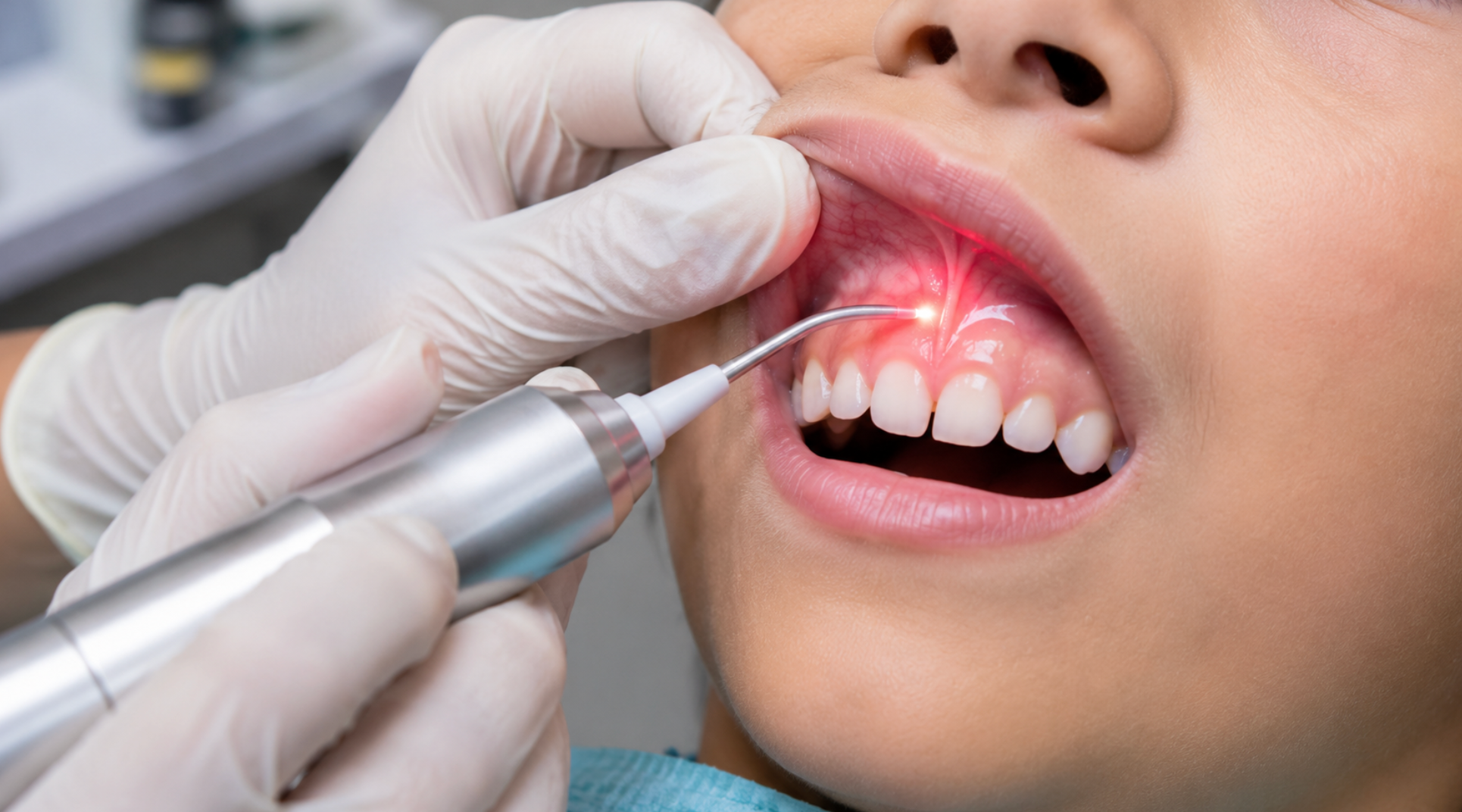
A laser frenectomy is a minimally invasive dental procedure that treats tongue tie (ankyloglossia), a condition that can restrict tongue movement and affect speech and feeding. Using advanced laser dentistry techniques, the procedure improves patient comfort, shortens recovery time and reduces risks commonly associated with conventional surgery. This page explains the procedure, its benefits for tongue-tied patients, and how laser dentistry at Trovato Family Dentistry in Kearny supports these treatments.
Laser frenectomies have changed the standard of care for tongue ties, delivering faster recovery and better functional outcomes across age groups. The procedure relieves the physical restriction of a tight frenulum and addresses related speech and feeding challenges that affect overall health. This guide outlines the advantages of laser frenectomy, explains tongue tie, and describes the recovery process while highlighting Trovato Family Dentistry’s use of advanced laser technologies.
Benefits for Tongue-Tied Patients:
The advantages of a laser frenectomy for individuals with tongue tie include improved comfort and more predictable recovery. Specifically, the procedure is:
- Minimally Invasive: Utilizing laser technology means that incisions are smaller and less traumatic, resulting in a procedure with lower risk of complications.
- Quick Recovery: Patients experience faster healing times compared to traditional methods, often resuming normal activities within days rather than weeks.
- Reduced Discomfort: The precision of laser treatment minimizes damage to surrounding tissues, leading to less pain and a more comfortable post-operative experience.
Offering laser frenectomy services at Trovato Family Dentistry reinforces these advantages and makes the procedure an efficient option for resolving tongue tie.
What Is Tongue Tie and How Does It Affect Patients?
Tongue tie, or ankyloglossia, is defined by an unusually tight or short lingual frenulum—the tissue under the tongue that limits movement. This restriction can cause functional problems, particularly in speech development and feeding for infants and children.
What Are the Common Symptoms and Challenges of Ankyloglossia?
Individuals with tongue tie may face several practical challenges, such as difficulties with clear speech, feeding problems in infancy, and obstacles to maintaining oral hygiene.
- Difficulty in Speech: The limited range of tongue movement can hinder the ability to articulate words clearly, often leading to speech delays or distortions.
- Feeding Challenges: Infants with tongue tie may struggle to latch effectively during breastfeeding, resulting in poor nutrition and weight gain.
- Oral Hygiene Issues: Limited tongue mobility can make it challenging to maintain proper oral hygiene, leading to increased risk of cavities and gum disease.
Early recognition of these symptoms enables timely intervention, which can markedly improve a child’s development and quality of life.
How Is Tongue Tie Diagnosed in Children and Adults?
Diagnosis typically involves a focused clinical assessment by a dental professional. The evaluation commonly includes a visual inspection of the frenulum, a review of the patient’s history and symptoms, and a discussion of any functional limitations.
- Visual Inspection: A clinician examines the frenulum to gauge its length and elasticity.
- Consultation Processes: A detailed discussion about the patient’s history may reveal common speech difficulties or feeding challenges.
- Patient History Assessments: Both parents and patients may be asked about any observable limitations in tongue movement and related symptoms.
If you suspect a tongue tie, seek professional guidance. For information on scheduling a consultation, visit the contact us page.
What Is Laser Frenectomy and How Does It Compare to Traditional Tongue Tie Surgery?
A laser frenectomy uses a concentrated light beam to precisely divide the frenulum while limiting heat and collateral tissue damage. This modern approach contrasts with traditional scalpel-based surgery, which usually requires sutures and can be more invasive.
What Are the Advantages of Laser Frenectomy Over Scalpel Methods?
The benefits of laser frenectomy include:
- Minimally Invasive Nature: The laser’s precision means less structural damage and a lower chance of infection, allowing for a streamlined recovery.
- Quicker Healing Times: Without the need for sutures, patients typically heal faster compared to traditional methods.
- Reduced Need for Anesthesia: Many patients experience less discomfort, allowing for procedures to be performed with minimal sedation.
Consequently, laser frenectomy has become increasingly preferred, particularly at practices such as Trovato Family Dentistry where patient comfort is emphasised.
How Does Soft Tissue Laser Technology Enhance Safety and Outcomes?
Applying soft tissue laser technology during a frenectomy improves safety and clinical results. Its key features include precise cutting, reduced bleeding and often the avoidance of sutures, all of which support a more predictable recovery.
- Less Tissue Damage: The precise cutting action minimizes trauma to the surrounding soft tissues.
- Lower Bleeding Risks: Laser technology cauterizes blood vessels as it cuts, leading to less bleeding during and after the procedure.
- No Need for Sutures: Because the laser promotes natural healing, the use of stitches is often unnecessary.
Integrating these technologies contributes to higher patient satisfaction and shorter recovery periods.
What Are the Step-by-Step Procedures Involved in a Laser Frenectomy?
A laser frenectomy follows a clear, patient-focused sequence designed for efficiency and comfort. The primary phases include consultation and preparation, the precise laser procedure itself, and structured post-operative care.
- Pre-Procedure Preparations: This involves consultation to ensure the patient understands the process and feels comfortable.
- Procedure Steps: Using specialized laser equipment, the frenulum is precisely sectioned without significant discomfort to the patient.
- Post-Procedure Care: Patients receive specific instructions on aftercare to optimize recovery and health.
How Is the Laser Frenectomy Performed at Trovato Family Dentistry in Kearny?
At Trovato Family Dentistry, experienced clinicians perform the procedure using state-of-the-art laser equipment to maintain high standards of safety and effectiveness. The team emphasises patient comfort and employs techniques to help patients remain relaxed throughout treatment.
What Should Patients Expect During and Immediately After the Procedure?
Patients commonly report the following during and after a laser frenectomy:
- Pain Management: Most patients describe minimal discomfort due to the precision of the laser compared to traditional surgical methods.
- Recovery Timeline: While some patients may feel minor discomfort, many can resume normal activities quickly, often within 24 to 48 hours.
- Follow-Up Care: Patients receive clear guidelines for aftercare and follow-up appointments to monitor healing.
Overall, the expectation is a well-managed procedure with proactive guidance to support recovery.
How Is Recovery Managed After Laser Frenectomy and What Are the Patient Outcomes?
Recovery after a laser frenectomy is generally straightforward and follows clear aftercare protocols to promote optimal healing and successful results.
What Is the Typical Recovery Timeline Following Laser Tongue Tie Treatment?
Healing times are typically short, often ranging from one to two weeks depending on individual factors. Patients are given specific aftercare instructions to support a smooth recovery.
How Does Laser Frenectomy Improve Speech, Feeding, and Oral Health?
Following treatment, many patients experience measurable improvements in key functional areas, such as clearer speech, easier feeding in infants and improved ability to maintain oral hygiene.
- Impact on Speech Clarity: Patients typically demonstrate enhanced articulation and clarity of speech once healing has occurred.
- Feeding Improvements: Many find they can eat and breastfeed more effectively, leading to better nutritional outcomes.
- Overall Oral Health Benefits: The restoration of full tongue mobility aids in maintaining better oral hygiene, significantly reducing risks of dental issues.
These outcomes illustrate the meaningful, practical benefits laser frenectomy can provide for tongue-tied patients.
How Does Laser Dentistry at Trovato Family Dentistry Support Anxious and Family Patients in Kearny?
Trovato Family Dentistry places a high priority on patient comfort, particularly for those who experience anxiety. Their use of advanced laser technology is intended to reduce pain and make procedures less distressing for families.
What Technologies and Techniques Mitigate Pain and Anxiety During Treatments?
The practice employs modern technologies and comfort-focused techniques, including appropriate sedation options when indicated, to improve the patient experience—especially for children and anxious adults.
What Financing and Accessibility Options Are Available for Laser Frenectomy Patients?
To make treatment accessible, Trovato Family Dentistry provides flexible financing options and assistance with understanding insurance benefits, helping patients manage potential out-of-pocket costs and access high-quality care.
What Common Questions Do Patients Have About Laser Frenectomy in Kearny?
Prospective patients often have questions about expected pain, risks, candidacy and practical aspects of the procedure; clear answers help support informed decisions.
How Painful Is Laser Tongue Tie Surgery and Are There Any Risks?
When performed correctly, most patients experience limited pain with laser frenectomy. As with any procedure, there are minor risks, but the precision of laser technology substantially reduces many of those concerns.
Who Is an Ideal Candidate for Laser Frenectomy Treatment?
Suitable candidates include individuals of all ages who exhibit symptoms related to tongue tie. A thorough clinical evaluation allows dental professionals to determine candidacy based on specific health and functional indicators.
| Benefit | Explanation |
|---|---|
| Minimally Invasive | Laser techniques reduce damage and promote quick healing. |
| Faster Recovery | Patients often feel better within days of their procedure. |
| Comfort | The precision of lasers leads to less discomfort compared to traditional methods. |
In summary, laser frenectomies at Trovato Family Dentistry combine technological advances with comprehensive patient support to address the challenges of tongue tie.
Frequently Asked Questions
What can I expect during a laser frenectomy consultation?
During consultation, the dentist conducts a focused visual inspection of the frenulum, reviews the patient’s medical and developmental history, and discusses any functional concerns related to speech or feeding. The evaluation clarifies the severity of the tongue tie and informs a recommended course of care, and patients are encouraged to ask questions about benefits, risks and expected outcomes.
Are there any age restrictions for undergoing a laser frenectomy?
There are no strict age limits for laser frenectomy; infants, children and adults can all be assessed for suitability. The clinician will tailor recommendations to the patient’s age, health status and specific functional needs, and early intervention is often beneficial for preventing long-term difficulties.
How should I care for my mouth after a laser frenectomy?
Proper post-operative care is important for healing. Typical advice includes avoiding spicy foods for a short time, practising gentle oral hygiene, staying well hydrated and following any specific instructions provided by the dental team. The practice will give personalised aftercare guidance and may suggest mild pain relief if needed.
What are the potential long-term benefits of laser frenectomy?
Long-term benefits can include improved speech clarity, better feeding function in infants and enhanced oral hygiene due to restored tongue mobility. By reducing functional limitations, the procedure may reduce the future risk of related dental problems and improve overall quality of life.
Is the laser frenectomy procedure covered by insurance?
Insurance coverage varies by policy and provider. Patients should verify benefits with their insurer. Trovato Family Dentistry staff can assist with insurance inquiries and help clarify potential out-of-pocket costs to support access to necessary care.
How does laser technology enhance the frenectomy procedure’s effectiveness?
Laser technology improves effectiveness by making precise incisions that limit damage to neighbouring tissues, reduce bleeding and often eliminate the need for sutures. The cauterising effect of the laser contributes to cleaner procedures, quicker healing and a generally more comfortable patient experience compared with conventional methods.
Conclusion
Laser frenectomies offer clear benefits for tongue-tied patients, including quicker recovery, reduced discomfort and measurable improvements in speech and feeding. At Trovato Family Dentistry, advanced laser technology is combined with patient-centred care to enhance safety and outcomes. If you or a family member are affected by tongue tie, consider scheduling a consultation to review treatment options and next steps. Visit our website to learn more and arrange an appointment.