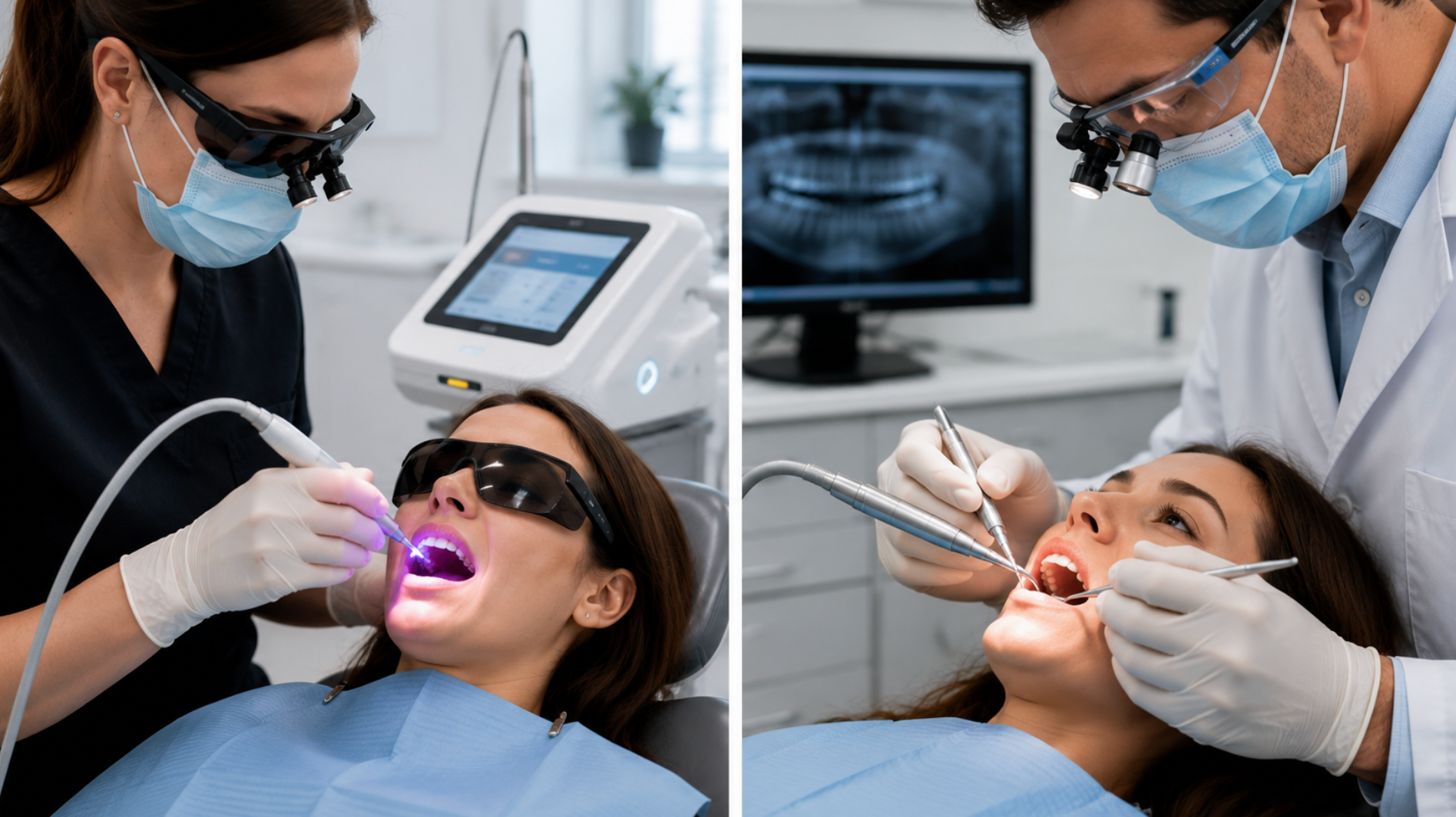
Laser dentistry marks a meaningful advance in clinical dental care and is increasingly preferred for its patient-centred benefits compared with traditional drills. Many patients seek alternatives that reduce pain and anxiety during common procedures. This article compares effectiveness, pain control, recovery times and patient satisfaction for laser versus conventional drilling, and highlights the technological developments influencing modern practice.
Effectiveness:
Laser dentistry has become a leading option for treating a range of dental problems. Using focused light energy to remove decay, lasers allow clinicians to limit intervention to the affected area rather than surrounding healthy tissue. That precision often produces improved clinical outcomes, with studies reporting faster healing and lower rates of post‑operative infection following laser treatment.
Pain Management:
Controlling pain is central to a positive patient experience. Laser procedures typically require less local anaesthesia than mechanical drilling, reducing the number of injections patients need. Many patients report markedly less discomfort with laser care, while the noise and vibration associated with drills can increase anxiety and diminish comfort during traditional treatment.
Recovery Times:
Recovery is a key consideration for patients. Because laser treatment is less invasive, it usually causes less bleeding and swelling, enabling a faster return to normal activities. In many cases post‑procedure recovery is measured in hours rather than days, offering clearer convenience and less disruption to daily life.
Overall Patient Satisfaction:
Patient satisfaction is an important measure of treatment success. Research indicates higher satisfaction rates among patients who receive laser therapy, driven by reduced pain, lower anxiety and shorter recovery. For these reasons, numerous patients seek practices that provide laser dentistry as part of their treatment options.
How Does Traditional Dental Drilling Work and What Are Its Patient Impacts?
Traditional dental drilling remains a widely used technique in restorative dentistry. A high‑speed rotary instrument removes decayed tooth material and prepares the site for a filling or further treatment. While effective, the method can produce audible noise, tactile vibration and associated discomfort, which contributes to patient anxiety and affects willingness to seek care.
What Are the Common Procedures Using Dental Drills?
Dental drills are applied in a range of standard procedures, including the treatments listed above. These methods remain foundational for preserving oral health, though the experience of drilling can deter some patients from timely care.
- Cavity Fillings: Removing decayed material and placing fillings.
- Root Canals: Accessing and treating decay and infection in the tooth’s pulp.
- Crown Preparation: Reshaping the tooth before placing a crown.
- Extractions: Removing problematic or damaged teeth.
These procedures are foundational in maintaining oral health, but the discomfort associated with drilling can deter many patients.
How Does Drilling Affect Patient Pain and Anxiety Levels?
Numerous studies show that traditional drilling can elevate patient anxiety. The sound and sensation of the drill often provoke apprehension and may lead to avoidance of dental visits. Drilling frequently requires higher levels of anaesthesia, which itself can be a source of concern. For these reasons many patients prefer less invasive alternatives when they are appropriate.
What Are the Technological Advantages of Laser Dentistry in Kearny?
Laser dentistry provides technological advantages that streamline procedures and improve the patient experience. The precision of laser systems enables clinicians to perform delicate work with minimal invasion, reducing trauma to teeth and gums. This translates into less post‑operative discomfort and generally shorter recovery periods for patients.
How Does Laser Dentistry Minimize Pain and Improve Comfort?
Laser techniques reduce procedural pain by limiting tissue disruption and often decreasing the need for anaesthesia. Patients commonly report greater comfort during treatment, noting the absence of loud drilling sounds and vibrations. The result is a calmer clinical environment and an overall improvement in the patient experience.
In What Ways Does Laser Dentistry Accelerate Recovery Compared to Drills?
Post‑operative recovery after laser procedures is generally quicker than after conventional drilling. Because lasers can precisely target affected areas while preserving healthy tissue, patients typically experience less swelling and pain. This expedited healing allows a faster return to routine activities and reduces the likelihood of prolonged downtime.
How Do Laser Dentistry and Traditional Drilling Compare in Managing Dental Cavities?
In cavity management, laser dentistry has demonstrated strong efficacy. Lasers can remove decayed tissue with minimal impact on surrounding healthy structures, making the procedure less invasive than traditional drilling in many cases. This reduced invasiveness contributes to lower discomfort and often better treatment outcomes.
What Are the Efficacy and Precision Differences Between Laser and Drill Methods?
Laser systems provide a higher degree of precision compared with rotary instruments. That targeted capability helps preserve healthy tooth structure and improves treatment accuracy. Enhanced precision and interaction with tissues can lead to more effective care and measurable improvements in patients’ oral health.
Which Method Is More Suitable for Patients with Dental Anxiety?
For patients with dental anxiety, laser dentistry is frequently a suitable alternative. The techniques reduce pain and sensory stimuli that commonly trigger apprehension. Many patients find that laser care lessens anxiety around dental visits, which supports greater adherence to recommended treatment and follow‑up.
What Are the Cost and Insurance Considerations for Laser Dentistry Versus Traditional Drills?
Cost is an important factor when selecting treatment. Laser procedures often carry a higher initial cost than traditional drilling, but they can reduce long‑term expenses through shorter recovery and fewer post‑treatment visits. Insurance coverage varies and may affect out‑of‑pocket costs for patients.
How Does Insurance Coverage Differ Between Laser and Traditional Treatments?
Insurance coverage differs by plan; some insurers may regard certain laser treatments as experimental. Patients should confirm benefits with their providers to understand coverage for both laser and conventional options. Clear information on coverage helps patients make informed decisions about care.
What Financing Options Make Laser Dentistry Accessible to Kearny Patients?
To increase accessibility, many practices, including Trovato Family Dentistry, offer financing plans for laser services. Flexible payment options help patients manage treatment expenses over time, reducing financial barriers to receiving recommended care.
What Do Patient Experiences and Testimonials Reveal About Laser Dentistry Benefits?
Patient testimonials offer practical insight into the benefits of laser dentistry. Many report greater ease during treatment and a more positive overall experience. Such firsthand accounts help prospective patients understand how laser options may address concerns associated with traditional methods.
How Do Patients Describe Pain and Comfort Levels After Laser Procedures?
Patients commonly describe laser procedures as considerably less painful than conventional drilling. Many report minimal discomfort, often noting a sensation more akin to gentle warmth than the invasive feeling associated with rotary instruments. These descriptions help set realistic expectations for new patients.
What Long-Term Oral Health Improvements Are Reported with Laser Dentistry?
Long‑term improvements reported after laser care include better overall oral health, lower infection rates and higher patient satisfaction. The efficiency and tissue preservation associated with lasers can yield longer‑lasting results and encourage consistent maintenance of oral hygiene.
Where Can Patients Access Professional Laser Dentistry Services in Kearny?
Patients interested in laser dentistry can find information and services at Trovato Family Dentistry, located at 445 Belgrove Drive, Kearny, NJ 07032. The practice emphasises patient comfort and the use of advanced technology. Individuals may schedule consultations by calling (201) 991-0177.
What Makes Trovato Family Dentistry a Trusted Provider of Laser Dental Treatments?
Trovato Family Dentistry has developed a reputation for delivering quality laser dental care with a focus on patient safety and education. Their commitment to current technologies supports high standards of treatment and contributes to positive patient experiences.
How Can Patients Schedule Consultations for Laser Dentistry in Kearny?
To schedule a consultation for laser dentistry, patients may contact Trovato Family Dentistry by calling (201) 991-0177. Staff are available to answer questions and guide patients through the appointment process. Patients should bring relevant medical histories and a list of current dental concerns to ensure a thorough consultation.
Frequently Asked Questions
What types of dental issues can be treated with laser dentistry?
Laser dentistry is a versatile option for a variety of conditions, including cavity removal, gum disease management, teeth whitening and selected oral surgical procedures. The precision of lasers preserves healthy tissue and supports minimally invasive care. Lasers are also used for procedures such as frenectomies and biopsies, and are often preferred for soft tissue work because of their accuracy and reduced healing time.
Are there any risks or side effects associated with laser dentistry?
Laser dentistry is generally safe, but some side effects can occur, such as temporary sensitivity or localized swelling. Proper clinician training and technique are essential to minimise risk; incorrect use may produce unintended tissue effects. Patients should discuss safety measures and post‑treatment care with their dentist to ensure optimal outcomes.
Is laser dentistry suitable for children?
Laser dentistry can be appropriate for children and is frequently well tolerated because it is less invasive and less intimidating than traditional drilling. Paediatric‑focused clinicians employ lasers for procedures like cavity treatment and soft tissue reshaping to provide a more comfortable experience. Parents should consult their child’s dentist about the suitability of specific treatments.
How often should patients visit the dentist after laser treatments?
After laser therapy, patients are generally advised to maintain routine dental check‑ups, commonly every six months, so the dentist can monitor healing and address any issues early. The reduced invasiveness of laser procedures often supports quicker recovery and a prompt return to regular oral care routines. Recommendations may vary by individual and treatment type.
Can laser treatments provide long-lasting results compared to traditional methods?
Many studies indicate that laser treatments can deliver durable results, in some cases exceeding outcomes from conventional approaches. Lasers reduce the risk of infection and better preserve healthy tooth structure, which can support long‑term oral health. Patients may experience fewer repeat visits for the same condition when treated with lasers.
How has laser technology evolved in dentistry recently?
Recent improvements in laser technology have expanded its clinical utility. Modern devices are more efficient, precise and user‑friendly, enabling a wider range of procedures with reduced patient discomfort. Advances such as adjustable wavelengths and integration with diagnostic tools have improved treatment planning and outcomes. Ongoing development continues to refine patient care and clinical results.
Conclusion
Choosing laser dentistry can offer patients a more comfortable, efficient and effective alternative to traditional drilling. Its minimally invasive nature reduces pain and recovery time while improving overall satisfaction. Patients seeking advanced dental care may benefit from consulting reputable practices that provide laser treatments to determine the best option for their needs.